Weekly Robotics #380
- The Hacksmith Industries' latest Battlebots video highlights the evolving role of AI in competitive robotics, raising questions about software versus hardware dynamics.
- The SF Robot Hackathon offers a unique opportunity for teams to engage with physical AI applications, emphasizing the importance of hands-on experience in robotics development.
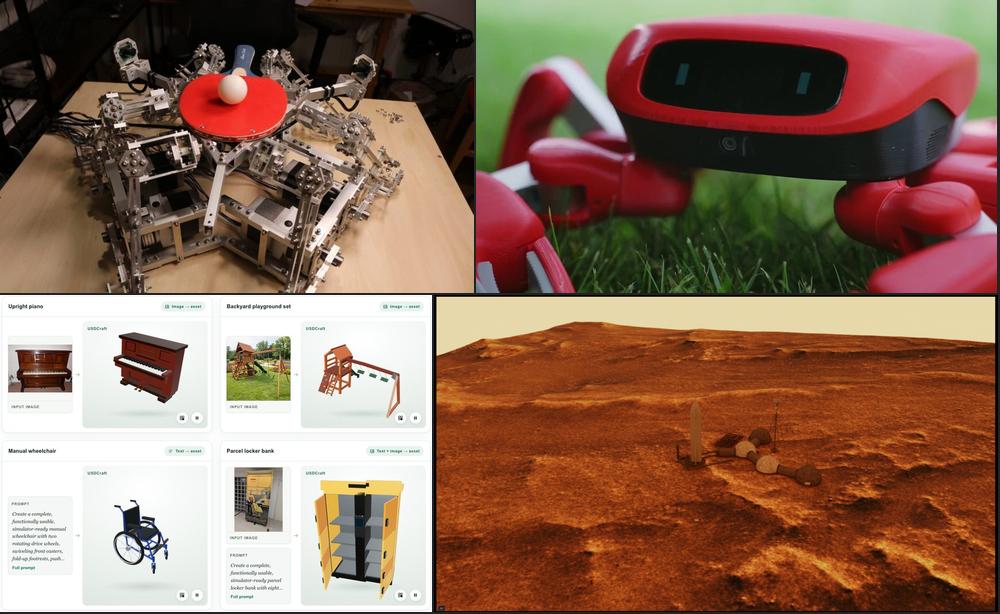
- Innovations like USDCraft and MarsLab signal a growing focus on simulation and realistic modeling in robotics, which are critical for advancing autonomous systems.
The recent developments in robotics, particularly the release of Hacksmith Industries' new Battlebots video, underscore a pivotal moment in the integration of AI within competitive robotics. As teams grapple with the implications of AI in their designs and strategies, the ongoing discourse about software versus hardware capabilities becomes increasingly relevant. This exploration not only reflects the competitive landscape but also highlights the need for a deeper understanding of how AI can enhance robotic performance in high-stakes environments.
In addition to the Battlebots excitement, the upcoming SF Robot Hackathon presents a significant opportunity for participants to delve into physical AI applications. By providing teams with real robot arms and access to MongoDB Atlas clusters, the event fosters an environment where practical skills and innovative thinking can flourish. The potential rewards, including SO-101 kits and substantial credits, further incentivize participation and underscore the importance of hands-on experience in the robotics field.
Meanwhile, the introduction of USDCraft, a library of articulated 3D assets for simulation, marks a noteworthy advancement in the realm of robotics. This resource aims to bridge the gap between real-world objects and their digital counterparts, facilitating more effective training and testing of robotic systems. The emphasis on realistic simulations is echoed in the launch of MarsLab, an open-source Mars rover simulator designed for autonomy and navigation algorithm development. Such tools are essential for preparing robots for complex environments, particularly in off-world scenarios.
As the robotics community continues to innovate, projects like Jumper, an open-source crab robot, and the Hexa-Bouncer showcase the diverse applications and creative approaches being explored. The focus on clean engineering and problem-solving in these builds reflects a commitment to advancing the field through collaboration and shared knowledge. The integration of AI, simulation, and practical applications will undoubtedly shape the future of robotics, making events like the SF Robot Hackathon and the insights from Hacksmith Industries crucial to the ongoing evolution of this dynamic industry.