Car Inverters Market to Reach USD 4.96 Billion by 2036, Germany - CAGR 8.3%, Brazil - CAGR 7.6%, UK
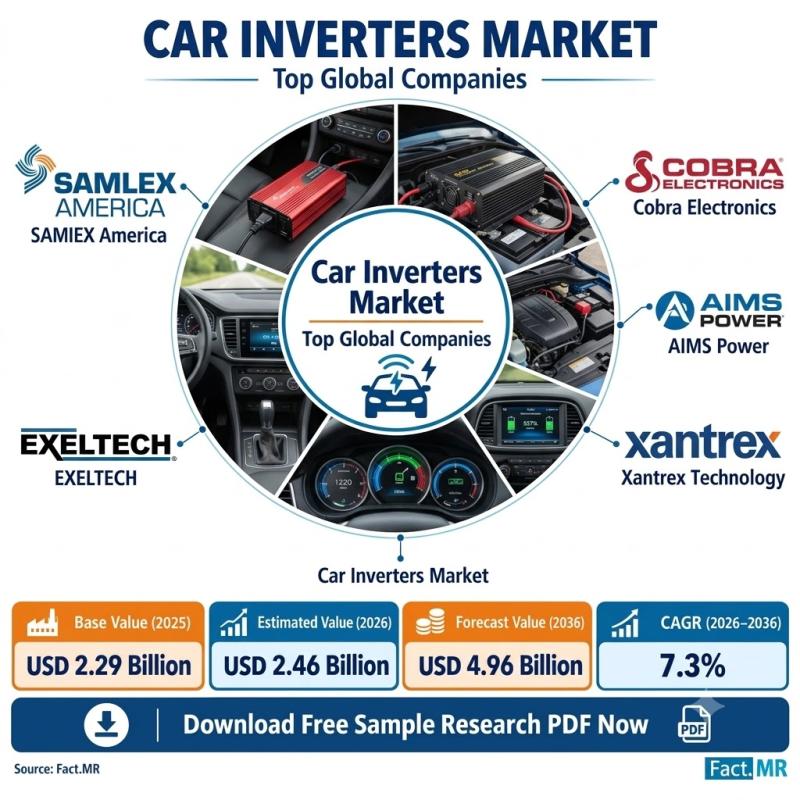
- The global car inverters market is set to nearly double in size over the next decade, indicating robust growth driven by increasing demand for electric vehicles and advanced automotive technologies.
- Germany and Brazil are expected to lead regional growth with significant CAGRs of 8.3% and 7.6%, respectively, reflecting their strong automotive sectors and commitment to electrification.
- The anticipated market expansion underscores the critical role of car inverters in the transition to sustainable transportation solutions, aligning with global energy efficiency goals.
The projected growth of the car inverters market is particularly significant as it reflects broader trends in the automotive industry, where electrification and energy efficiency are becoming paramount. With the market expected to rise from USD 2.46 billion in 2026 to USD 4.96 billion by 2036, achieving a compound annual growth rate (CAGR) of 7.3%, this upward trajectory signals a pivotal shift in consumer preferences and regulatory landscapes favoring electric vehicles (EVs) and hybrid technologies. The urgency of this transition is underscored by the increasing global focus on reducing carbon emissions and enhancing energy efficiency in transportation.
Germany's anticipated CAGR of 8.3% positions it as a leader in the car inverters market, driven by its robust automotive industry and proactive policies promoting electric mobility. The country’s commitment to sustainability and innovation in automotive technology is likely to foster an environment conducive to the development and adoption of advanced inverter systems. Similarly, Brazil's projected CAGR of 7.6% reflects its growing automotive sector and the increasing integration of EVs into its market, suggesting that both regions are aligning their industrial strategies with global trends toward electrification.
This growth in the car inverters market is not merely a reflection of increasing vehicle electrification; it also highlights the critical role that inverters play in optimizing energy use within vehicles. As automotive manufacturers increasingly incorporate sophisticated electronic systems, the demand for efficient power conversion technologies will rise. This trend is essential for enhancing vehicle performance, extending battery life, and improving overall energy management, which are crucial factors for consumer acceptance of electric vehicles.
The implications of this market expansion extend beyond just economic growth; they also align with global energy efficiency goals. As countries strive to meet international climate commitments, the automotive sector's shift towards electrification and the adoption of advanced technologies like car inverters will be essential. This transition not only supports the reduction of greenhouse gas emissions but also encourages innovation in energy systems, paving the way for a more sustainable future in transportation.